
Basement Mold: Causes, Signs, and How to Get Rid of It
- April 13, 2026
- Posted by: ajglover
- Category: Uncategorized
Basement Mold: Causes, Signs, and How to Get Rid of It
Basements are the most common location for mold in DMV-area homes. Between groundwater intrusion, condensation, and the region’s humid summers, Maryland and DC basements are constantly fighting moisture. Here’s everything homeowners need to know about basement mold.
Why Basements Are So Prone to Mold
Several factors make basements uniquely vulnerable to mold growth:
- Below-grade location: Basement walls are in direct contact with soil, which contains moisture that migrates through concrete and block over time.
- Limited ventilation: Basements often have few or no windows, trapping humid air.
- Condensation: Cold basement walls and pipes cause warm humid air to condense — especially in Maryland and DC summers when outdoor humidity is high.
- Flooding risk: Basements are the first area affected by heavy rain events, sump pump failures, and groundwater intrusion.
- Plumbing concentration: Most home plumbing runs through the basement — leaks from water heaters, washing machines, and supply lines are common.
Signs of Basement Mold
Visible Signs
- Dark spots or patches on walls, ceiling, or floor (black, gray, green, or white)
- White chalky deposits on concrete or block walls (efflorescence — a sign of water migration)
- Staining at the base of walls or in corners
- Fuzzy growth on stored boxes, furniture, or wood framing
- Rust stains around pipes or floor drains
Non-Visible Signs
- Persistent musty smell in the basement or on the first floor above
- Allergy symptoms that worsen at home
- Condensation on windows or pipes
- Peeling paint or wallpaper
- Warped wood paneling or baseboards
Types of Basement Mold
The most common mold species found in Maryland and DC basements include:
- Cladosporium: Often olive-green or black; one of the most common indoor molds; can grow in cooler conditions
- Penicillium: Blue-green; often found on water-damaged materials; spreads quickly
- Aspergillus: Various colors; can cause respiratory issues; common on damp drywall
- Stachybotrys (black mold): Greenish-black; requires consistently wet conditions; produces mycotoxins
Regardless of species, any significant mold growth should be remediated. Don’t wait for lab confirmation to take action — visible mold in your basement means the conditions are right for it to spread.
Basement Mold Remediation: What the Process Looks Like
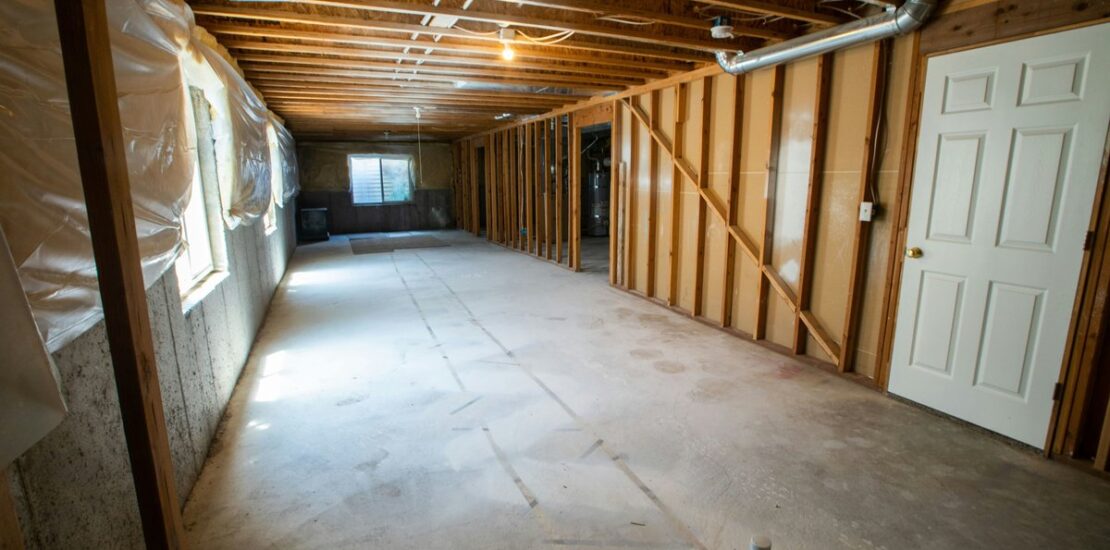
Unfinished Basement
Mold on exposed concrete, block, or wood framing in an unfinished basement is relatively straightforward to remediate. HEPA vacuuming, wire brushing, and antimicrobial treatment of affected surfaces can typically be done in 1–2 days.
Finished Basement
Finished basements are more complex. Mold often grows behind drywall where it’s invisible from the surface. Affected drywall must be removed, the framing treated, and new drywall installed. A finished basement remediation typically takes 3–5 days including reconstruction.
How to Prevent Basement Mold
- Control humidity: Keep basement humidity below 50% with a dehumidifier. In Maryland and DC summers, this typically means running a dehumidifier continuously.
- Fix cracks and leaks: Seal foundation cracks and ensure window wells drain properly.
- Improve drainage: Grade the soil around your home so water drains away from the foundation.
- Maintain your sump pump: Test it regularly and consider a battery backup for power outages during storms.
- Vent appliances properly: Ensure dryers, bathrooms, and other moisture sources vent directly outside.
- Don’t store cardboard in damp basements: Cardboard is a mold food source. Use plastic bins instead.
Should You Use Bleach on Basement Mold?
Bleach is commonly recommended for mold, but it has significant limitations:
- Bleach kills surface mold on non-porous materials (tile, concrete) but does not penetrate porous materials like wood or drywall
- On porous surfaces, bleach kills the surface growth but leaves the roots (hyphae) alive inside the material — mold returns within weeks
- Bleach fumes in an enclosed basement can be hazardous
For surface mold on concrete block, a dilute bleach solution (1 cup bleach per gallon of water) can be effective. For mold on wood framing or drywall, professional remediation with EPA-approved antimicrobials is more effective.
Free Basement Mold Inspection in MD, DC & VA
FreshStep Mold Remediation provides free basement mold inspections with moisture readings and a written assessment — at no charge, with no obligation. We serve all of Maryland, Washington DC, and Northern Virginia.
Call (240) 551-6802 or contact us online. We typically respond within hours.
Why Choose FreshStep?
- 2-Year Mold-Free Guarantee — If mold returns to a treated area within 2 years, we come back at no charge.
- Licensed & Certified — Maryland Mold Remediation License #114938. IICRC Certified technicians on every job.
- Flexible Payment Plans — 50% down to start, with the remaining balance split into 2–3 monthly payments. No lump-sum required.
- Free Inspection & Estimate — No fees, no commitment. We inspect, provide a written report, and you decide.